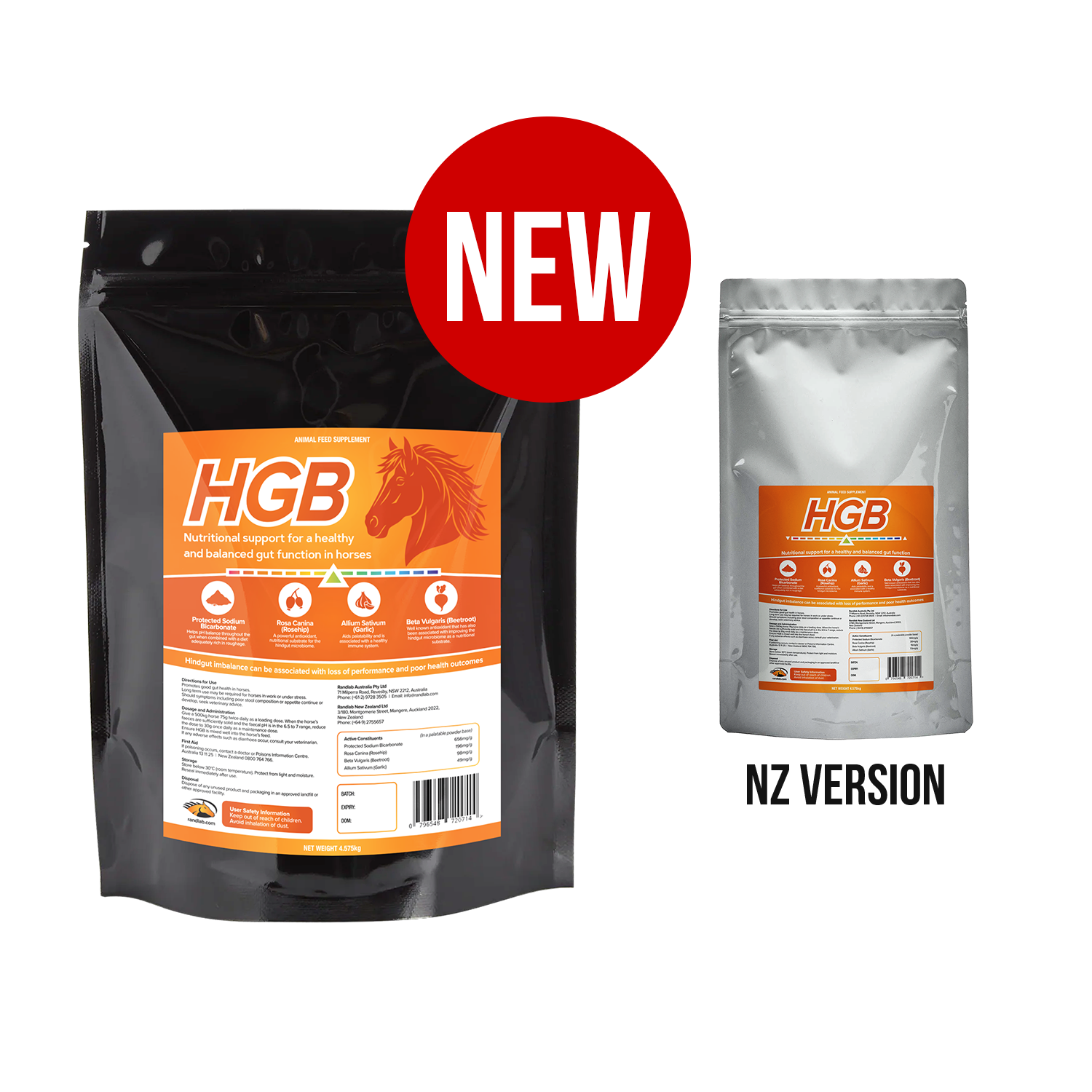
Hindgut imbalance in horses can be associated with
loss of performance and poor health outcomes.
Subclinical hindgut acidosis has been identified as a cause of a number of subtle findings, incl:
- • drop in levels of expected performance
- • inappetence
- • recurrent colic
- • diarrhoea or loose faeces
- • weight loss or poor body condition
- • flank sensitivity
- • poor hoof or coat quality
- • behavioural changes
- • poor utilisation of food (feeding more but not achieving the expected weight gain)
- • stereotypical behaviours such as fence walking, cribbing, weaving etc
- • occasionally “endotoxic storms”, colitis and laminitis
Non-structural carbohydrates (NSC) are usually fed to performance horses to fuel the increased exercise load. Fermentation of these NSC in the horse’s hindgut results in excessive production of lactate and volatile fatty acids and a drop in colonic/caecal pH. This will lead to changes in the hindgut microbiota and in some cases may result in death of populations of bacteria with consequent release of endotoxins giving rise to colitis, diarrhoea and laminitis.
HindGut Balancer (HGB) is a new approach to dealing with equine hindgut dysbiosis. To help reestablish or maintain a healthy gut flora, HGB contains a protected (encapsulated) form of sodium bicarbonate which is not released until it reaches the large intestine. HGB also contains probiotics and nutrients which promote a healthy microbiome and have additional benefits.
The performance horse with faecal pH of 6.5 or less with a poorly formed stool will likely benefit from regular use of HGB. Horses post-injury, post-illness or following a course of antibiotics may also benefit.